
an agent skill
A secret recipe
Colleagues in Product, Customer Success, and Support call it “life changing”. Their words, not mine.
scroll, or use your arrow keys (the recipe is yours at the end)
first, a quick intro
Hi, I’m Kina
Product designer turned product lead at BuildPass, a construction-tech startup. My days are roadmap priorities, clear context on what problem to solve and why it matters, the occasional tiny PR, and all the words in between.
a normal Tuesday
Most of my day is communicating
Helping beta customers onboard a new feature
A changelog for product marketing
A support escalation that has to land right
A design-partner email
Positioning a new feature
Thinking out loud with the team
Selling, explaining, managing expectations - sometimes all in the same paragraph.
tbh
I’m conscientious, reflexive, and prone to worrying
I find these moments lowkey stressful: sounding sure without overpromising, saying no without a wall of apology, being clear when I’m not even certain yet.
Every message is a tiny negotiation.
what I actually needed
A sous chef for the first cut
Someone to take everything flying around and consolidate it into a draft that already follows my principles.
- What happened
- What this means for you
- What we’re asking you to do
- What we’ve done
It does the chopping. The plating is still mine.
so I made a skill
Think of it as a base recipe
A skill is a folder of plain-text instructions: a SKILL.md front door, plus building blocks it reads as needed. Mine is called refine
One reusable idea per file, from writers who study this for a living
Managing up, sideways, down, and out to customers
Slack, email, changelog, support reply
Swap any layer. A lot of combos.
Steal from writers you look up to
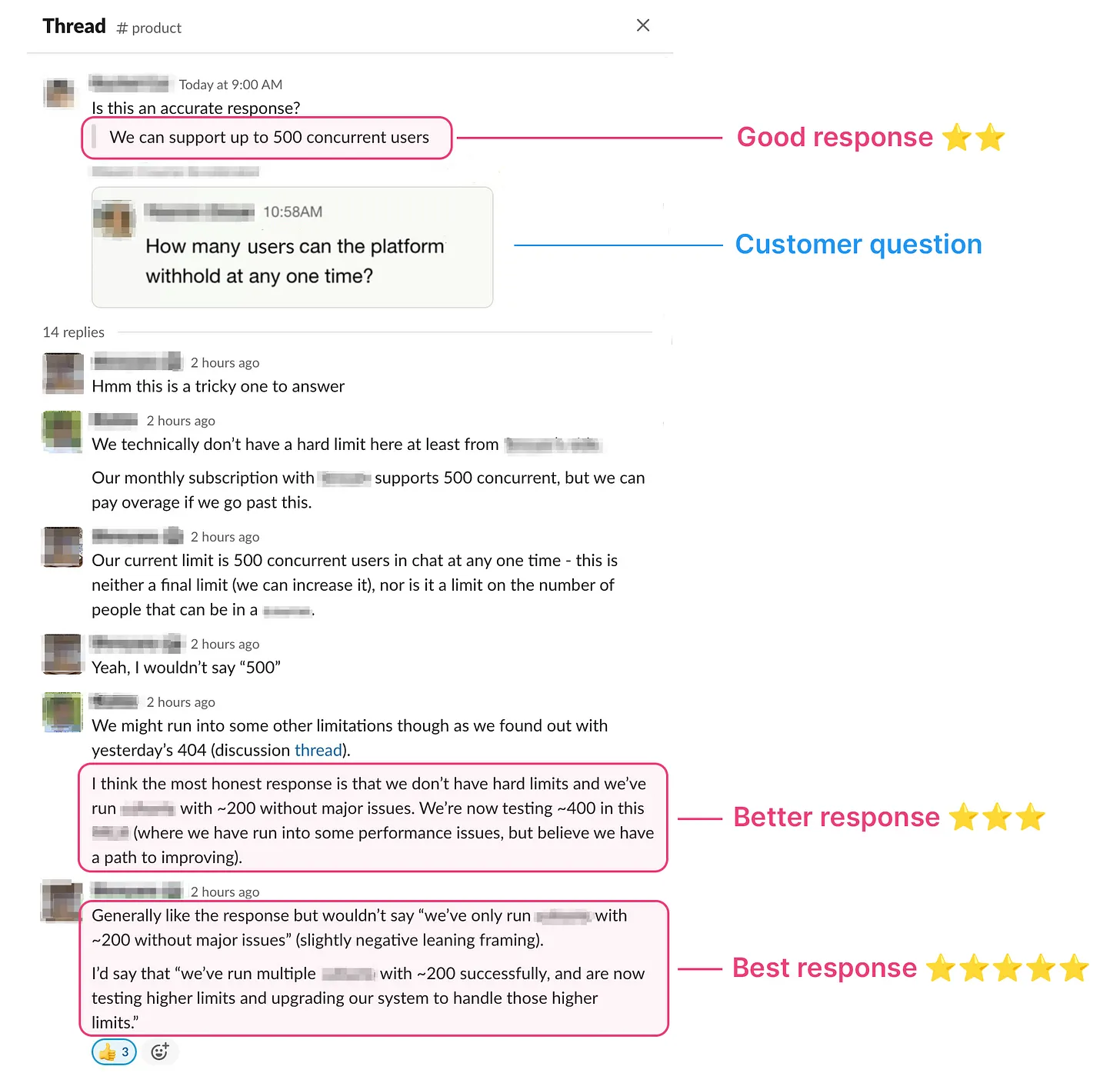
Most of refine restates Wes Kao’s frameworks. My favourite is finesse: same facts, framed so they land.
stocking the pantry
Your ingredients are everywhere
Substacks, blogs, and articles from writers you love
An agent with chrome-devtools MCP can screenshot and extract what you’re reading
Podcast transcripts. I borrowed a colleague’s Lenny’s subscription and analysed the people I love (and guests I’d never heard of)
Your own greatest hits: the messages that landed, kept as worked examples
tuned to you
It reads the room, and it reads you
Audience playbooks cover managing up, sideways, down, and out to customers. A voice.md distils how I actually write: LinkedIn posts, gmails, whatsapps, slacks. Mine is built from 115 samples.
You refine it over time, the way you learn to eyeball a dash of sugar.
an extreme example
We had two incidents
Every affected customer needed the right message: which incident hit them, how badly, and what we were doing about it.
At scale, with zero room for a wrong detail.
communication at scale
Everyone gets their custom burger
Which incident? One, two, or both. A block of text we swap per scenario.
How severe? Low impact gets softer, more reassuring wording.
The specifics. A second skill queried the database, so every message named exactly who was impacted, and where.
Could you imagine doing this manually!? I’d be so worried I’d fuck something up.
the final touch
You’re the chef
If people say your writing “sounds like AI”, that’s a skill issue. Give it high-quality context, real principles, and the tools to gather ingredients.
Your judgement still makes the call on when it’s good.
the goodies

